An oral cancer screening is a quick visual and hands-on check of your lips, mouth, tongue, and neck that your dentist does at a routine dental checkup, and it’s one of the best tools we have for early detection of mouth cancer. If you spend a lot of time on the water or in the sun, it matters even more, because sun exposure is a major risk factor for lip cancer.
At SEDA Dental of Jupiter, we see a lot of boaters, fishermen, and beach lovers. We love that about this town. But years of Florida sun can take a toll on the lips that people rarely think about. A screening takes a couple of minutes, doesn’t hurt, and could catch something early, when treatment works best.
Key Takeaways
- An oral cancer screening is part of a regular dental exam and takes just a few minutes.
- Major risk factors include tobacco use, alcohol consumption, HPV, and sun exposure for lip cancer.
- Warning signs include a mouth sore that won’t heal, a red patch or white patch, a lump, or numbness.
- Only a biopsy can confirm cancer. A screening finds spots that need a closer look.
- Early detection makes a big difference in survival and treatment.
What happens during an oral cancer screening?
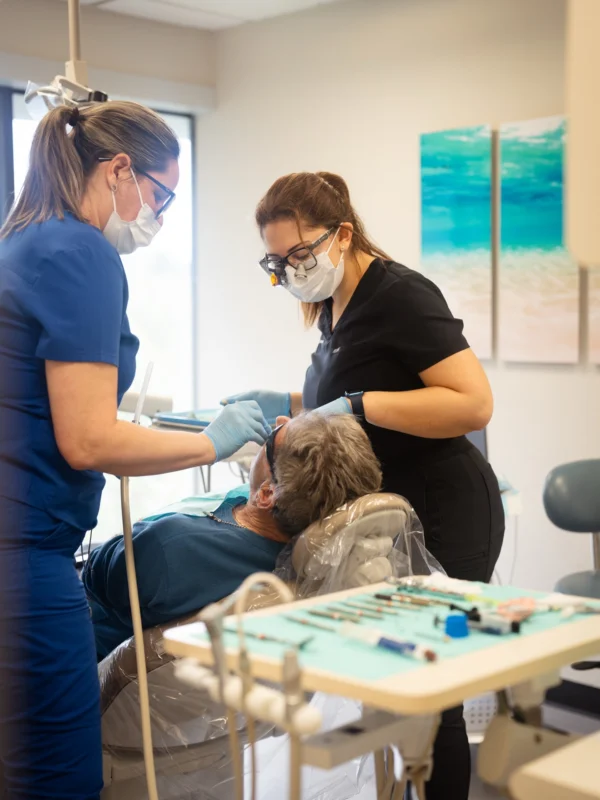
We do it during your routine dental checkup. It usually takes two or three minutes:
- Visual examination. We look at your lips, gums, cheeks, the roof and floor of your mouth, and all sides of your tongue for any oral lesion, color change, or sore.
- Palpation. We gently feel your jaw, under your chin, and the sides of your neck for lumps or swollen lymph nodes.
- Tongue check. We hold your tongue with gauze to see the sides and underneath, common spots for tongue cancer.
- Questions. We ask about any changes you’ve noticed, like soreness, trouble swallowing, or hoarseness.
Some offices also use adjunctive screening tools, like a special screening light such as VELscope or a toluidine blue dye rinse, to help spot abnormal tissue. These can be helpful, but they don’t replace a careful exam, and they can’t diagnose cancer on their own. Ask us what we recommend for you.
Why sun and boating raise your risk
Most people put sunscreen on their face and forget their lips. But the lower lip catches a lot of direct sun, especially on a boat, where light reflects off the water too. Over years, that UV damage can cause precancerous cells and lip cancer. Tanning beds add to the risk.
Simple habits help a lot:
- Use a lip balm with SPF 30 or higher and reapply often on the water.
- Wear a wide-brimmed hat when fishing or boating.
- Skip tanning beds.
- Check your lips for rough, scaly, or crusty spots that don’t heal.
Other risk factors for mouth cancer
Tobacco use of any kind, including cigarettes, cigars, pipes, and chewing tobacco, is one of the biggest risk factors. Heavy alcohol consumption raises the risk too, and using both together raises it much more. HPV, the human papillomavirus, is now a leading cause of oropharyngeal cancer, which affects the back of the throat, tonsils, and base of the tongue. HPV-related cancers often show up in people who don’t smoke or drink, which is one more reason everyone should be screened. Age and a weakened immune system also play a part.
Most oral cancers are squamous cell carcinoma, which starts in the thin cells lining the mouth. Together with throat cancers, they’re grouped as head and neck cancer.
Early signs of oral cancer to watch for
See a dentist if any of these last more than two weeks:
- A mouth sore or ulcer that won’t heal
- A red patch or white patch on the gums, tongue, or lining of the mouth
- A lump, thickening, or rough spot
- Pain, tenderness, or numbness in the mouth or lips
- Trouble chewing, swallowing, or moving your jaw or tongue
- A lump in your neck or a lasting sore throat or hoarseness
Most of these turn out to be something harmless, like a canker sore or an irritated spot from a sharp tooth. But it’s always worth checking.
What if we find something suspicious?
Don’t panic. Most spots we flag are not cancer. Usually we’ll check it again in about two weeks to see if it heals. If it doesn’t, we’ll refer you to an oral surgeon or an oral pathologist for a biopsy, where a tiny piece of tissue is tested in a lab. That’s the only way to know for sure. If it is cancer, catching it early means simpler treatment and better outcomes.
If you’re referred for a biopsy, we know the wait for results can feel long. Ask questions, bring someone with you if it helps, and call us anytime. We’ll help you understand what the results mean and what comes next. You won’t be left to figure it out alone.
Why early detection matters
This is the part we feel strongly about. According to the American Cancer Society, the five-year survival rate for oral cancer found before it spreads is roughly 85 percent. Once it has spread to other parts of the body, that number drops sharply. Many cases are found late simply because early oral cancer often doesn’t hurt. An annual screening as part of your routine dental checkup is an easy way to stay ahead of it.
We also think of screenings as a chance to talk about prevention. If you smoke or chew tobacco and want to quit, we can point you to resources. If you’re out on the water every weekend, we’ll remind you about SPF lip balm. Small changes now protect your mouth for years.
Frequently Asked Questions
How often should I get an oral cancer screening? At least once a year, usually at your regular dental exam. If you have higher risk factors, we may check more often.
Does an oral cancer screening hurt? No. It’s a quick look and a gentle feel of your mouth and neck.
Is it covered by insurance? It’s usually part of a routine exam. Costs depend on your insurance and the care you need, and we explain costs before any treatment.
Can I check myself at home? Yes. Once a month, use a mirror and good light to look at your lips, gums, cheeks, and tongue, and feel your neck for lumps. Tell us about any change.
Get screened in Jupiter
Your dental exam with Dr. Caroline Samaan, DMD, at our Jupiter office includes an oral cancer screening, so you don’t have to ask for it separately. We see patients from Jupiter, Tequesta, Palm Beach Gardens, Jupiter Farms, Juno Beach, and Hobe Sound. Learn more on our Jupiter dentist page, read about dental cleanings in Jupiter, or see why regular dental exams matter and how often to go.
Call SEDA Dental of Jupiter at (561) 575-7720 or book online. We’re at 210 Jupiter Lakes Blvd, Bldg 5000 Suite 204, Jupiter, FL 33458, open Monday to Thursday, 8am to 5pm.