Tartar buildup is plaque that has hardened onto your teeth, and once it forms, it bonds to the enamel so tightly that brushing, flossing, and home scraping tools can’t safely remove it. Only a professional cleaning can take it off without damaging your teeth or gums.
We get asked about this all the time at SEDA Dental in Boynton Beach, usually by someone who has spotted a yellow or brown line along their bottom front teeth and wants to know if they can just pick it off. We understand the urge. But please don’t. Here’s why, and what actually works.
Key Takeaways
- Plaque starts hardening into tartar within a day or two if it isn’t brushed and flossed away.
- Tartar can’t be brushed off. Trying to remove tartar at home with metal picks can scratch enamel and cut your gums.
- Left alone, tartar feeds gingivitis, gum disease, cavities, and bad breath.
- A dental hygienist removes tartar safely during a professional cleaning.
- Costs depend on your insurance and the care you need. We explain costs before any treatment.
What is tartar, and how does it form?
Plaque is a soft, sticky film of bacteria that forms on your teeth every day, especially after sugary foods and drinks. If you brush twice a day and floss, you clear most of it. What you miss starts to absorb minerals from your saliva and hardens. That hardened plaque is tartar, also called calculus.
It usually shows up first behind the lower front teeth and on the outside of the upper back teeth, right where your saliva glands are. It can be yellow, brown, or even black, and it often hides below the gumline where you can’t see it at all.
Can you remove tartar at home?
No, and this is where we feel strongly. Those metal scrapers sold online look like what we use, but in untrained hands they do more harm than good. It’s very easy to slip and cut your gums, scratch your enamel, or push tartar further under the gumline. You also can’t see or reach the tartar below the gums, which is the part that does the most damage.
Baking soda, vinegar, and other home remedies won’t dissolve tartar either. Some are acidic and can wear down enamel. What you can do at home is stop new tartar from forming.
Why tartar buildup is a problem
Tartar is rough, so it gives bacteria a perfect place to cling and multiply. Over time that causes:
- Gingivitis. Red, puffy gums that bleed when you brush.
- Gum disease. If tartar works its way below the gumline, it can lead to periodontal disease, bone loss, and gum recession.
- Cavities. Bacteria trapped against teeth produce acid that breaks down enamel.
- Bad breath. Tartar holds odor-causing bacteria you can’t rinse away.
- Stains. Tartar soaks up coffee, tea, wine, and smoking stains easily.
Are some people more prone to fast tartar buildup?
Yes. Some people build tartar much faster than others, even with good oral hygiene. Common reasons include saliva that’s high in minerals, dry mouth from medications, smoking, braces or crowded teeth that are hard to clean, diabetes, and a diet high in sugary foods. Many of our patients over 55 notice more buildup as medications change their saliva. If that sounds like you, more frequent cleanings make a real difference.
How we remove tartar at your dental cleaning
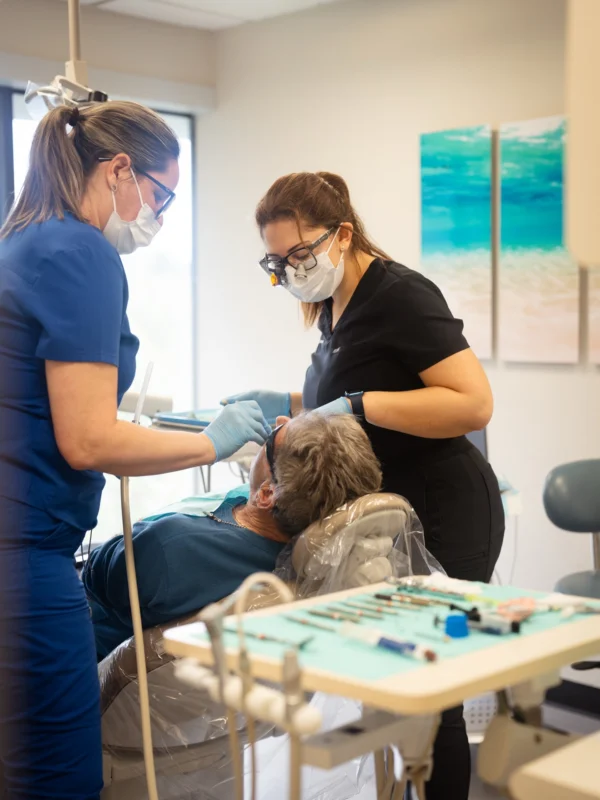
During a professional cleaning, your dental hygienist uses an ultrasonic scaler that vibrates tartar loose while rinsing it away with water, then fine hand tools to clean each tooth surface and just below the gumline. We polish your teeth so the surface is smooth and harder for plaque to stick to. Most people say it feels strange more than uncomfortable, and we can numb sensitive areas if needed.
If tartar has moved deep below the gums and created pockets, a regular dental cleaning won’t reach it. That’s when we recommend scaling and root planing, a deeper cleaning that treats gum disease. Our deep cleaning vs. regular cleaning guide explains the difference. Dr. Kenneth Rubinstein, DMD, is a periodontist, so this is exactly his specialty.
What to expect after professional tartar removal
Right after tartar removal, your teeth will feel smooth and clean, almost slippery when you run your tongue over them. That’s what healthy enamel is supposed to feel like. Some people notice their teeth are a little sensitive to cold for a day or two, especially if a lot of buildup was sitting near the gumline and covering the root surface. That usually fades quickly. A sensitivity toothpaste helps if it lingers.
Your gums may also look a bit red or feel tender for a few days, and they might bleed slightly when you brush. That’s normal as they heal. Keep brushing gently and keep flossing. Within a week or two, most people see firmer, pinker gums that bleed less. If you had a lot of tartar, we may want to see you back sooner than six months to keep it from building up again, and to check how your gums are responding. Honestly, this is one of our favorite parts of the job: watching gums that were puffy and bleeding turn healthy again.
How to prevent tartar buildup at home
Here’s the checklist we give our patients:
- Brush twice a day for two full minutes with fluoride toothpaste. A tartar-control toothpaste can help.
- Try an electric toothbrush. Studies show they remove more plaque than manual brushing for most people.
- Floss or use a water flosser every day to clean between teeth.
- Cut back on sugary foods and sipping sweet drinks all day.
- Drink water, especially if you have dry mouth, to keep saliva flowing.
- If you smoke, quitting helps your gums more than almost anything else.
- See your dentist for a professional cleaning every six months, or more often if we recommend it. Here’s more on how often to go.
For more everyday tips, read our guide to preventing cavities between cleanings.
Frequently Asked Questions
Can tartar cause gum disease if left untreated? Yes. Tartar along and below the gumline keeps gums inflamed, which can turn gingivitis into periodontal disease over time.
How often should I get a professional cleaning to remove tartar? Every six months for most people. If you build tartar fast or have gum disease, every three or four months is often better.
Does an electric toothbrush prevent tartar better? For most people, yes. It removes more plaque, which means less turns into tartar. It still can’t remove tartar that has already formed.
Will removing tartar make my teeth look whiter? Often, yes. Tartar holds a lot of stain, so teeth usually look cleaner and brighter afterward.
Get tartar removed in Boynton Beach
If you can see tartar on your teeth, it’s time for a cleaning. Patients come to our Boynton Beach office from Delray Beach, Lake Worth, Wellington, Hypoluxo, and Manalapan. Learn more about dental cleanings in Boynton Beach.
Call SEDA Dental Implants of Boynton Beach at (561) 738-9007 or book online. We’re at 10075 Jog Rd, Suite 108, Boynton Beach, FL 33437, open Monday to Thursday, 8am to 5pm.