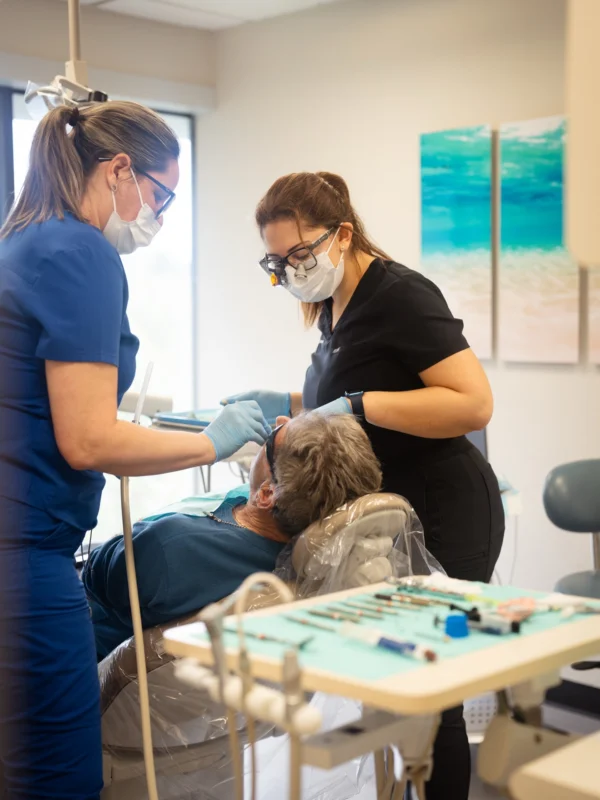
A teeth cleaning at SEDA Dental in Boynton Beach takes about an hour. Your hygienist removes plaque and tartar, polishes your teeth, checks your gums, and then the dentist does a full exam so you leave knowing exactly where your oral health stands.
That’s the short answer. The longer one is that a good cleaning should feel calm, unhurried, and honest. If you’ve ever had a bad dentist experience that made you dread the chair, we understand, and we work hard to be the opposite of that. Here’s what your visit at our Boynton Beach dental office really looks like.
Key takeaways
- Plan on about an hour for teeth cleanings and an exam. First visits with x-rays can run a little longer.
- Most people need a dental cleaning every six months. Some do better every three or four months.
- A regular cleaning is preventive. Scaling and root planing treats gum disease below the gumline.
- Costs depend on your insurance and the care you need. We explain costs before any treatment.
- You can ask us to slow down, stop, or explain anything at any time.
Teeth cleaning Boynton Beach: what happens at your visit
We start by talking. Tell us what’s going on: a sore spot, gums that bleed, sensitivity, a crown that feels off, or just that it’s been a while. We review your health history and medications, because things like blood thinners, diabetes, and dry mouth from prescriptions all affect your gums. Many of our patients are 55 and older, so we pay close attention to how health changes show up in the mouth.
Next, your hygienist measures your gums. We gently check the small pocket around each tooth. Shallow pockets mean healthy gums. Deeper ones can be a sign of periodontal disease, and that changes the plan.
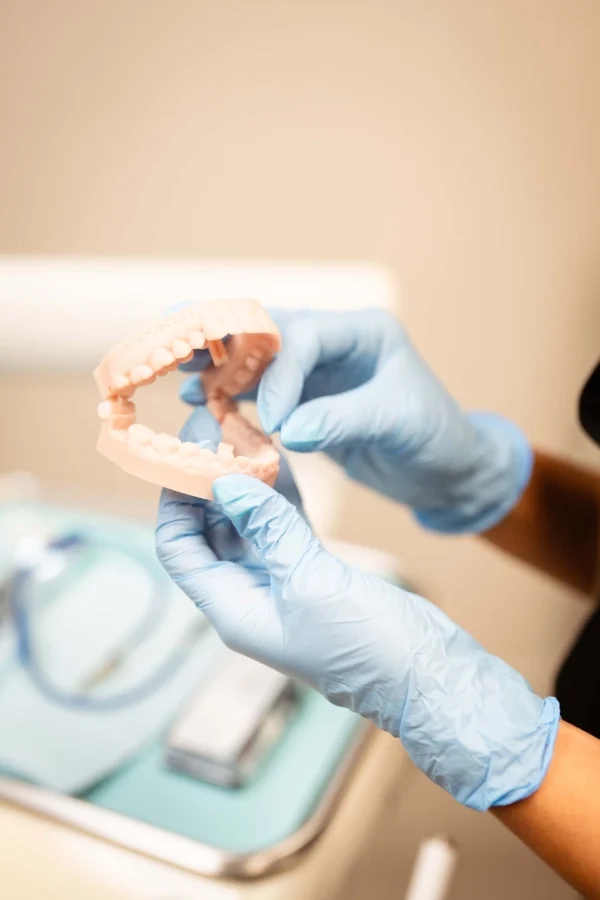
Then comes the cleaning itself. We remove plaque and tartar with an ultrasonic scaler and fine hand tools, paying extra attention along the gumline and between teeth. We polish your teeth to smooth the surface and lift stains, floss, and rinse. If you’re at higher risk for cavities, we may recommend a fluoride treatment to strengthen enamel.
If you’re due, we take x-rays. They show what we can’t see with our eyes: decay between teeth, problems under old dental fillings or crowns, and bone levels around your teeth. We use only what you need, and modern digital x-rays use very low radiation.
Finally, the dentist does your exam and an oral cancer screening. Dr. Kenneth Rubinstein, DMD, is a periodontist, so gum health is his specialty. You’ll hear plainly what looks good, what we want to watch, and what, if anything, needs care. Every plan is personalized treatment, not a script.
Here’s a quick checklist of what to bring to your first visit:
- Your insurance card and a photo ID.
- A list of medications and supplements you take.
- Records or x-rays from your last dentist, if you have them.
- Questions or problem spots you want us to look at.
- If you have dental implants, dentures, or a night guard, mention it so we clean and check around them properly.
Why does all of this matter so much? Because your mouth changes as you get older, and cleanings are where we catch those changes early. Many medications cause dry mouth, and less saliva means more cavities, especially along the gumline and around older fillings. Gums can recede, exposing softer root surfaces. If you’ve had dental implants placed, the gum and bone around them need the same steady care as natural teeth. A cleaning every few months is one of the simplest ways to keep the teeth you have for the rest of your life, and honestly, that’s the part of this job we love most.
We also know that some people walk in nervous. Maybe a past visit was rough, or maybe you’re embarrassed it’s been so long. Please don’t be. We’d rather see you now than later, and nobody here is going to lecture you. We’ll explain each step before we do it, agree on a signal if you need a break, and go at your pace. Most people tell us afterward that it was much easier than they expected.
Think of regular teeth cleanings as the foundation of everything else we do. A dental cleaning every six months, paired with dental checkups, keeps gum disease from sneaking up on you and catches periodontal disease while it is still easy to manage. As your Boynton Beach dentist, our goal is simple: protect your oral health now so you need less treatment later.
You can read more about our dental cleaning services in Boynton Beach, and our guide to types of teeth cleaning explains each option in more detail.
Your questions about teeth cleaning, answered
How often should I get a teeth cleaning? Every six months works for most people. If you’ve been treated for gum disease, have diabetes, smoke, or build tartar quickly, every three or four months may keep your gums healthier. Regular dental checkups also let us catch small problems before they turn into a root canal or a lost tooth. See how often you should go to the dentist for more.
How much does a teeth cleaning cost in Boynton Beach? Costs depend on your insurance and the care you need. A routine preventive cleaning, a deep cleaning, and x-rays are each billed differently, so the total depends on what your mouth needs that day. Most dental insurance plans include preventive teeth cleanings, often twice a year. The easiest way to know your cost ahead of time is to call us with your insurance information before your visit. We will check your benefits, tell you what your plan covers, and explain any out-of-pocket costs before treatment starts. If you do not have insurance, ask us about your options when you call. You will never be surprised at the front desk.
Does a teeth cleaning hurt? For most people, no. It can feel odd, and inflamed gums may be tender. Tell us and we’ll slow down, adjust, or numb a sensitive area. You never have to tough it out.
How long does a cleaning take? About an hour for a cleaning and exam. A first visit or one with full x-rays can take a bit longer. Deep cleanings are often split into two visits.
What’s the difference between a regular cleaning and a deep cleaning? A regular cleaning removes buildup above and just below the gumline. It’s preventive. When tartar has moved deep below the gums and pockets are deeper, we recommend scaling and root planing, which cleans the root surfaces so gums can heal. Our deep cleaning vs. regular cleaning guide goes further.
Can I eat or drink right after a teeth cleaning? After a regular cleaning, yes. If you had a fluoride treatment, wait about 30 minutes before eating or drinking. After a deep cleaning, choose soft foods for a day if your gums feel tender.
Do I need x-rays at every cleaning? No. Most people need bitewing x-rays about once a year and a full set every few years, depending on your history and risk for cavities. Digital x-rays use a very small amount of radiation, and we only take them when they will actually help us see something we need to see.
What else can I get done at your office? Beyond cleanings, our dental services include dental fillings, dental crowns, root canal treatment, dental sealants, teeth whitening, veneers, Invisalign, dental implants, and emergency dentistry. We’re a family dentistry practice that also handles cosmetic dentistry, so you can keep your whole healthy smile in one place.
Book your teeth cleaning with a Boynton Beach dentist
Our Boynton Beach office is at 10075 Jog Rd, Suite 108, an easy drive from Delray Beach, Lake Worth, Wellington, Hypoluxo, and Manalapan. We’re open Monday to Thursday, 8am to 5pm. Whether you’re right on schedule or it’s been years, we’d be glad to see you. Call SEDA Dental Implants of Boynton Beach at (561) 738-9007 or book your visit online.