A teeth cleaning at SEDA Dental of Jupiter takes about an hour and covers three things: a careful look at your teeth and gums, removal of the plaque and tartar your toothbrush can’t reach, and honest advice you can actually use at home. You walk out with a smooth, clean mouth and a clear picture of your oral health.
If it’s been a while, or you’re new to the area and looking for a Jupiter dentist, we get it. A lot of people put off a dental cleaning because they don’t know what’s coming. So here’s exactly what happens, start to finish, from the people who do it every day.
Key Takeaways
- A dental cleaning removes hardened tartar that brushing and flossing can’t, no matter how good your routine is.
- We check your gum health first, because it decides whether you need a routine cleaning or something deeper.
- Most people come in every six months. People with periodontal disease often do better every three or four months.
- You can ask us to stop, slow down, or explain anything at any point.
- Dental cleaning cost depends on your dental insurance and the care you need. We go over costs with you before any treatment.
What happens at a teeth cleaning in Jupiter, FL?
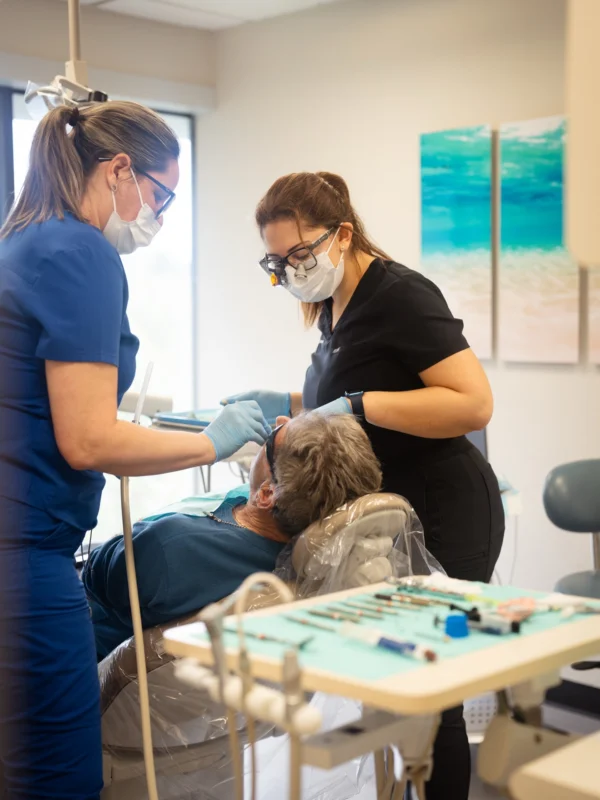
Here’s the honest version. You sit down, we talk for a minute, we look, we clean, and we tell you what we found. No mystery, no lecture.
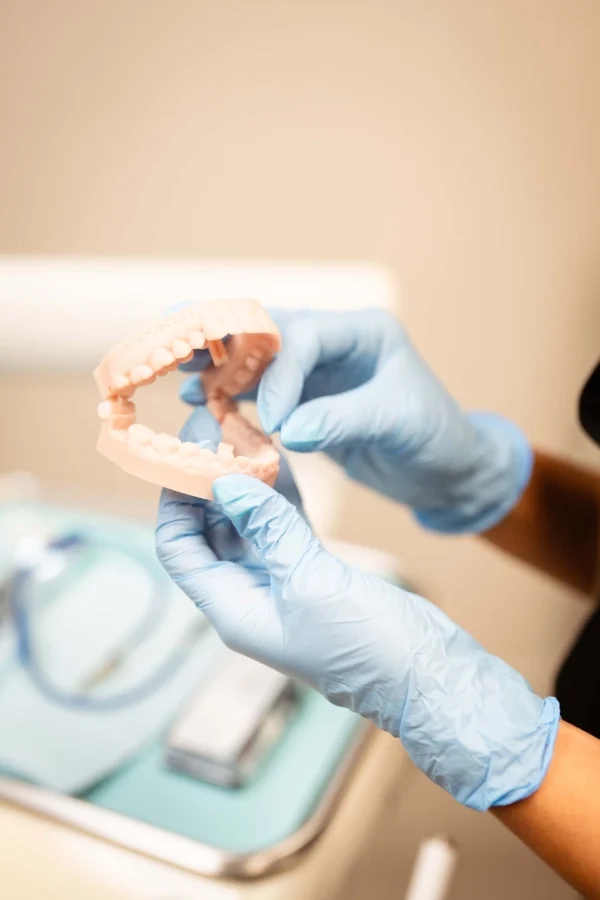
Plaque is the soft, sticky film that builds up on your teeth every day. Left alone, it hardens into tartar, and once that happens it’s stuck. Brushing harder won’t touch it. It gives bacteria a rough surface to hold onto right at the gumline, which is where gingivitis starts, and it feeds tooth decay and cavities over time.
Here’s what your visit looks like:
- We talk first. Tell your dental hygienist about anything that’s been bugging you. A sensitive tooth, gums that bleed, bad breath that won’t quit, jaw soreness from teeth grinding. Small details help a lot.
- We check your gums. We gently measure the small pockets between your gums and teeth. Healthy pockets are shallow. Deeper ones can mean buildup has moved below the gumline.
- We remove plaque and tartar. We use hand tools and an ultrasonic scaler, which uses vibration and water to break tartar loose. You’ll hear some scraping and feel some water. That’s normal.
- Polishing. A gritty paste smooths your enamel and lifts a lot of surface stain from coffee, tea, and wine.
- We floss and rinse, then offer a fluoride treatment if it makes sense for you. It strengthens enamel and helps protect against cavities.
- Your dental exam. Dr. Caroline Samaan, DMD, looks at the whole picture, reviews any X-rays you need, and does an oral cancer screening. It only takes a minute, and it’s one of the most important parts of the visit.
- We make a plan together. You’ll know when to come back for your next dental checkup and what, if anything, needs attention before then.
Does a dental cleaning hurt?
For most people, no. It might feel a little odd, especially the scraping sounds, but it shouldn’t hurt.
If your gums are inflamed or you have exposed roots, some spots can feel tender. Tell us. We can slow down, use a gentler setting, or numb a sensitive area. You never have to sit there and tough it out. Raise your hand and we stop. That’s a promise, not a policy line.
Prophylaxis vs. scaling and root planing: which one do you need?
This is the question people worry about most, so let’s be straight about it. You don’t decide ahead of time. Your gum health decides, and we show you what we find.
A prophylaxis is the dental term for a routine preventive cleaning. If your gum pockets are shallow and your gums aren’t bleeding much, that’s the right call. We clean above the gumline and just below it, and you’re done. It’s preventive care at its best.
If tartar has worked its way deep below the gumline and the pockets are deeper, that usually means periodontal disease, and a prophylaxis can’t reach it. That’s when we talk about scaling and root planing, often called a deep cleaning. It cleans the root surfaces under the gums so they can heal and tighten back up. After that, most people move to periodontal maintenance visits every three to four months to keep things stable.
We’ll never spring that on you. We show you the numbers, explain what they mean, and answer your questions first. Our guides on deep cleaning vs. regular cleaning and types of teeth cleaning go deeper.
How often should you get your teeth cleaned?
Every six months works well for most people. It stops tartar from building up in a big way and gives us a regular look so we can catch gingivitis, cavities, or early tooth decay while they’re small and simple to fix.
Some people need to come in more often. If you’ve been treated for periodontal disease, smoke, have diabetes, or just build tartar fast, every three or four months may keep you healthier. Here’s more on how often you should see the dentist.
How to get ready, and what to do after
You don’t need to do anything special. Don’t spend the night before scrubbing your gums raw. It won’t remove tartar, and it can leave you sore. Here’s a quick checklist instead:
- Bring your dental insurance card and a list of any medications you take.
- Write down questions or problem spots so you don’t forget them in the chair.
- Tell us about health changes since your last visit, like heart surgery or a joint replacement.
- Brush and floss like you normally do that morning.
- If it’s been years, tell us. No judgment. We’re just glad you came in.
After your visit, brush twice a day with a fluoride toothpaste, clean between your teeth once a day, and go easy along the gumline. Gentle circles beat hard scrubbing every time. If bad breath, or halitosis, keeps coming back even with good habits, mention it at your next visit. It’s often a sign of something we can help with. For the bigger picture, here are the top 10 reasons regular cleanings matter, and if your gums have been bleeding, read whether a cleaning can get rid of gum disease.
A Jupiter dentist close to Tequesta and Palm Beach Gardens
Our office is on Jupiter Lakes Blvd, an easy drive from Jupiter, Tequesta, Palm Beach Gardens, Jupiter Farms, Juno Beach, and Hobe Sound. Lots of our patients fit a cleaning in before work, after a morning on the water, or between school drop-off and pickup. See more about our team on our Jupiter dentist page, or read about dental cleanings in Jupiter. We’re open Monday to Thursday, 8am to 5pm.
Frequently Asked Questions
How much does a teeth cleaning cost in Jupiter, FL without insurance?
Dental cleaning cost depends on whether you need a routine cleaning or a deep cleaning, and whether X-rays are due. Without dental insurance, ask us when you book. We explain costs before any treatment so there are no surprises. Our post on cleanings without insurance has more.
Can I eat or drink right after a teeth cleaning?
After a routine cleaning, yes. If you had a fluoride treatment, wait about 30 minutes before eating or drinking so it can soak into your enamel. After a deep cleaning, stick with soft foods if your gums feel tender.
What if I get nervous at the dentist?
Tell us when you book. We’ll take more time, explain each step before we do it, and agree on a signal for breaks. If anxiety is a big barrier for you, ask about comfort options and we’ll talk through what fits.
Will a cleaning whiten my teeth?
Polishing removes a lot of surface stain, so your teeth often look brighter. It won’t change their natural color the way whitening does. Ask us about whitening once your teeth and gums are healthy.
Can I get a cleaning if my gums bleed?
Yes, and you should. Bleeding gums are often an early sign of gingivitis, which is very treatable when we catch it early. Staying away only gives it time to get worse.
Book your teeth cleaning in Jupiter
If you’re due, overdue, or just want someone to take a real look, we’d love to see you. Call SEDA Dental of Jupiter at (561) 575-7720 or book your visit online. We’re at 210 Jupiter Lakes Blvd, Bldg 5000 Suite 204, Jupiter, FL 33458.