
Straighten your smile, improve your bite, and feel more confident with personalized orthodontic care at SEDA Dental. Our orthodontic team offers braces, Invisalign®, and clear aligner options designed around your smile, lifestyle, and long-term oral health.
Braces, Invisalign®, clear aligners, retainers, and orthodontic evaluations available at select SEDA Dental locations.
Orthodontic treatment focuses on correcting the position of your teeth and bite. If your teeth are crowded, crooked, spaced too far apart, or your bite does not come together properly, orthodontics may help create a healthier, more comfortable, and more confident smile.
At SEDA Dental, orthodontic care may include braces, Invisalign®, clear aligners, retainers, and treatment planning for children, teens, and adults.
Orthodontic treatment with braces helps straighten crowded or misaligned teeth, making daily brushing and flossing easier and more effective. This reduces plaque buildup, lowers cavity risk, and helps prevent gum disease over time.
Braces correct issues like overbite, underbite, and crossbite, improving how your teeth come together. Proper bite alignment reduces strain on your jaw, prevents uneven wear, and can help eliminate discomfort or chewing issues.
Orthodontic treatment with braces helps create a straighter, more balanced smile that can improve how you feel about your appearance. This boosts confidence, helping you smile more naturally in both social and professional situations.
Orthodontic treatment with braces helps align teeth properly, reducing the risk of shifting, cracking, or uneven wear. This supports long-term dental stability, helping you maintain a healthier, stronger smile for years to come.
Traditional braces use brackets and wires to gradually move your teeth into better alignment. They may be recommended for children, teens, or adults, especially when more controlled tooth movement is needed.
Clear or ceramic braces work similarly to traditional braces but use tooth-colored or less noticeable materials. They may be a good choice for patients who want the reliability of braces with a more discreet look.
Invisalign uses a series of clear, removable aligners to gradually straighten your teeth. Because the aligners are removable, they allow you to eat, brush, and floss more normally during treatment.
Clear aligners may be an option for patients with mild to moderate crowding, spacing, or alignment concerns. During your consultation, our orthodontic team can explain whether clear aligners are a good fit for your smile.
After orthodontic treatment, retainers help maintain your results and reduce the chance of teeth shifting back over time.
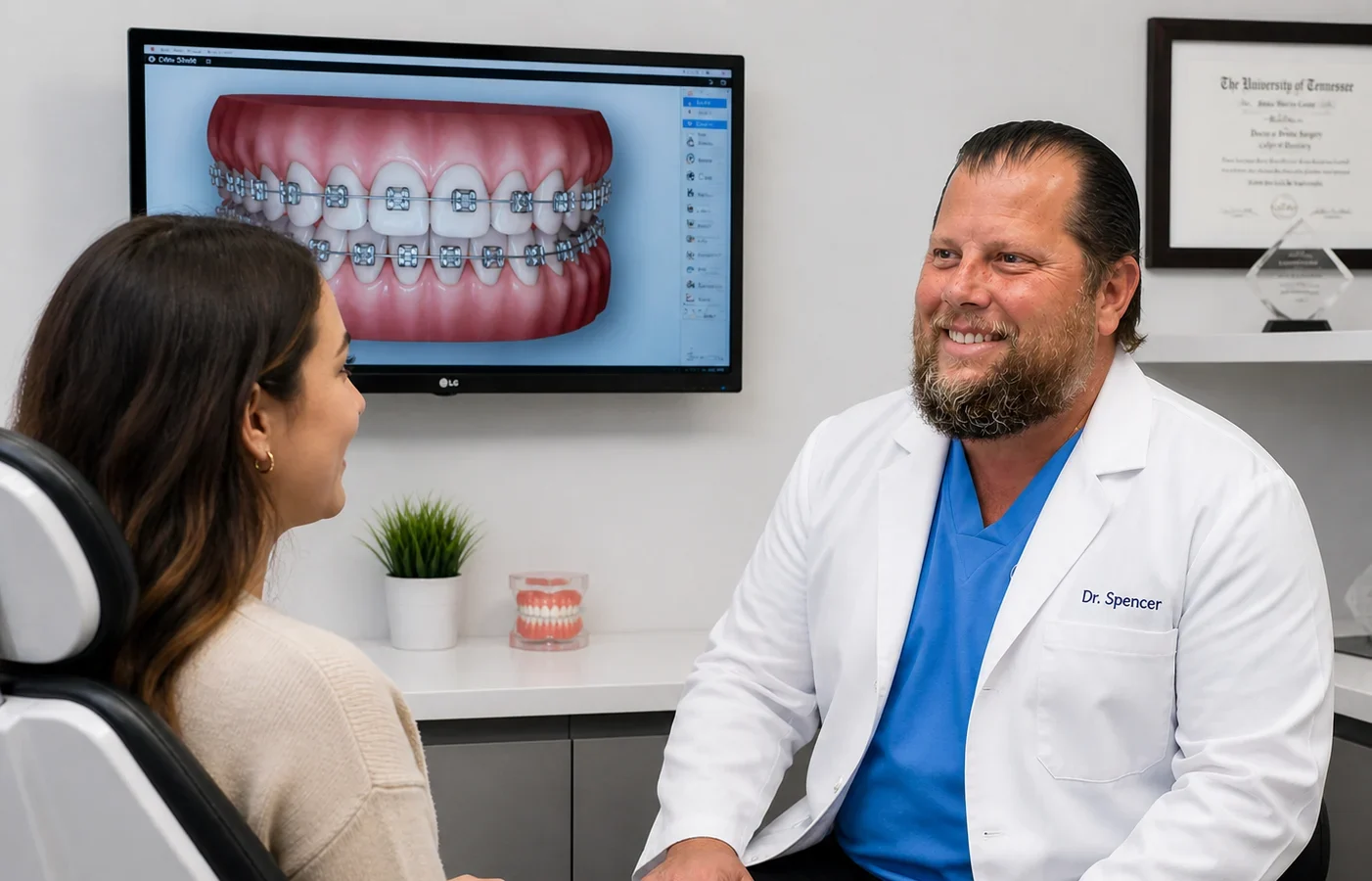
Orthodontic treatment starts with understanding your smile, your bite, and your goals. During your orthodontic evaluation at SEDA Dental, our team will examine the position of your teeth, check how your bite comes together, and talk with you about what you would like to improve.
From there, we can explain whether braces, Invisalign, clear aligners, or another orthodontic option may be right for you. You do not need to know which treatment you want before you come in. That is exactly what the evaluation is for.
After your evaluation, you will leave with a clearer understanding of your options, what treatment may involve, and the next step toward a healthier, straighter smile.
| Comparison Question | Braces | Invisalign / Clear Aligners | Patient Takeaway |
|---|---|---|---|
| What does it look like? | Uses brackets and wires attached to the teeth. Traditional metal braces are visible, while clear or ceramic braces are less noticeable. | Uses a series of clear, removable trays that fit over the teeth and are designed to be discreet. | Clear aligners are usually the more discreet option, while braces may be more visible depending on the type. |
| Can I remove them? | No. Braces stay on the teeth throughout treatment and are adjusted by the orthodontist. | Yes. Aligners are removable for eating, drinking, brushing, and flossing. | Aligners offer more flexibility, but patients must wear them as directed for treatment to work properly. |
| What can I eat? | Some sticky, hard, or chewy foods may need to be avoided to protect the brackets and wires. | Since aligners are removed while eating, there are typically fewer food restrictions. | Clear aligners may make mealtimes easier, while braces require more care with certain foods. |
| How do I clean my teeth? | Brushing and flossing require extra care around brackets and wires. Special tools may be recommended. | Aligners are removed for brushing and flossing, making daily oral hygiene more similar to your normal routine. | Aligners may be easier for daily brushing and flossing, but both options require good oral hygiene. |
| What types of issues can they treat? | Braces can treat many orthodontic concerns, including crowding, spacing, crooked teeth, and more complex bite issues. | Clear aligners can treat many mild to moderate alignment and bite concerns, depending on the case. | The best option depends on your teeth, bite, goals, and the orthodontist's recommendation. |
| Who is a good candidate? | Braces may be a good choice for children, teens, and adults, especially when more controlled tooth movement is needed. | Clear aligners may be a good choice for responsible teens and adults who can wear the trays consistently. | Braces can be better for some complex cases, while aligners can be great for patients who want a removable, discreet option. |
| How often are appointments needed? | Braces usually require periodic visits for adjustments and progress checks. | Clear aligner patients usually have periodic check-ins to monitor progress and receive new aligners. | Both options require follow-up visits so the orthodontist can make sure treatment is moving as planned. |
| How long does treatment take? | Treatment time varies based on the complexity of the case, patient age, bite issues, and treatment goals. | Treatment time also varies and depends on how consistently the aligners are worn and how much tooth movement is needed. | The only way to know your estimated timeline is to schedule an orthodontic evaluation. |
| Which one is more comfortable? | Braces may cause temporary soreness after adjustments and can sometimes irritate the cheeks or lips. | Clear aligners may cause temporary pressure or soreness when switching to a new set of trays. | Some discomfort is normal with any orthodontic treatment because the teeth are being moved. |
| Which option costs more? | Cost depends on the type of braces, treatment complexity, insurance benefits, and treatment length. | Cost depends on case complexity, number of aligners, treatment length, and insurance benefits. | SEDA Dental can review your options, insurance benefits, and financing during your consultation. |
| Will I need a retainer afterward? | Yes. Retainers are usually needed after braces to help maintain the new tooth position. | Yes. Retainers are usually needed after clear aligner treatment to help protect your results. | Retainers are an important part of keeping your new smile in place after orthodontic treatment. |
| How do I know which option is right for me? | Braces may be recommended if your orthodontic needs require more precise or complex tooth movement. | Clear aligners may be recommended if you are a good candidate and want a removable, discreet treatment option. | Start with an orthodontic evaluation. The orthodontist will explain your best options based on your smile and bite. |
Braces:
Braces use brackets and wires attached to the teeth. Traditional metal braces are visible, while clear or ceramic braces are designed to be less noticeable.
Invisalign / Clear Aligners:
Invisalign and clear aligners use a series of clear, removable trays that fit over the teeth and are designed to be discreet.
Patient Takeaway:
Clear aligners are usually the more discreet option, while braces may be more visible depending on the type of braces you choose.
Braces:
No. Braces stay on your teeth throughout treatment and are adjusted by your orthodontist.
Invisalign / Clear Aligners:
Yes. Clear aligners are removable for eating, drinking, brushing, and flossing.
Patient Takeaway:
Aligners offer more flexibility, but they must be worn as directed for treatment to work properly.
Braces:
Some sticky, hard, or chewy foods may need to be avoided to protect the brackets and wires.
Invisalign / Clear Aligners:
Since aligners are removed while eating, there are usually fewer food restrictions.
Patient Takeaway:
Clear aligners may make mealtimes easier, while braces require more care with certain foods.
Braces:
Brushing and flossing require extra care around brackets and wires. Special cleaning tools may be recommended.
Invisalign / Clear Aligners:
Aligners are removed for brushing and flossing, making daily oral hygiene more similar to your normal routine.
Patient Takeaway:
Clear aligners may be easier for daily brushing and flossing, but both options require good oral hygiene throughout treatment.
Braces:
Braces can treat many orthodontic concerns, including crowding, spacing, crooked teeth, and more complex bite issues.
Invisalign / Clear Aligners:
Clear aligners can treat many mild to moderate alignment and bite concerns, depending on the case.
Patient Takeaway:
The best option depends on your teeth, bite, goals, and your orthodontist’s recommendation.
Braces:
Braces may be a good choice for children, teens, and adults, especially when more controlled tooth movement is needed.
Invisalign / Clear Aligners:
Clear aligners may be a good choice for responsible teens and adults who can wear the trays consistently.
Patient Takeaway:
Braces may be better for some complex cases, while aligners can be a great option for patients who want a removable, discreet treatment.
Braces:
Braces usually require periodic visits for adjustments and progress checks.
Invisalign / Clear Aligners:
Clear aligner patients usually have periodic check-ins to monitor progress and receive new aligners.
Patient Takeaway:
Both options require follow-up visits so your orthodontist can make sure treatment is moving as planned.
Braces:
Treatment time varies based on the complexity of the case, patient age, bite issues, and treatment goals.
Invisalign / Clear Aligners:
Treatment time also varies and depends on how consistently the aligners are worn and how much tooth movement is needed.
Patient Takeaway:
The only way to know your estimated timeline is to schedule an orthodontic evaluation.
Braces:
Braces may cause temporary soreness after adjustments and can sometimes irritate the cheeks or lips.
Invisalign / Clear Aligners:
Clear aligners may cause temporary pressure or soreness when switching to a new set of trays.
Patient Takeaway:
Some discomfort is normal with any orthodontic treatment because the teeth are being moved.
Braces:
Cost depends on the type of braces, treatment complexity, insurance benefits, and treatment length.
Invisalign / Clear Aligners:
Cost depends on case complexity, number of aligners, treatment length, and insurance benefits.
Patient Takeaway:
SEDA Dental can review your options, insurance benefits, and financing during your consultation.
Braces:
Yes. Retainers are usually needed after braces to help maintain the new tooth position.
Invisalign / Clear Aligners:
Yes. Retainers are usually needed after clear aligner treatment to help protect your results.
Patient Takeaway:
Retainers are an important part of keeping your new smile in place after orthodontic treatment.
Braces:
Braces may be recommended if your orthodontic needs require more precise or complex tooth movement.
Invisalign / Clear Aligners:
Clear aligners may be recommended if you are a good candidate and want a removable, discreet treatment option.
Patient Takeaway:
Start with an orthodontic evaluation. Your orthodontist will explain your best options based on your smile, bite, and goals.
An orthodontic evaluation can help identify crowding, bite issues, jaw growth concerns, or early signs that treatment may be needed in the future. Not every child needs braces right away, but an evaluation can help parents understand timing.
Teen orthodontic treatment can help correct crooked teeth, crowding, spacing, and bite problems during an important stage of growth. Depending on the case, teens may be candidates for braces, Invisalign, or clear aligners.
Many adults choose orthodontic treatment because their teeth have shifted, they never had braces as a child, or they want to improve their smile before cosmetic or restorative dental work. Braces and clear aligners can both be options depending on your needs.
The cost of orthodontic treatment depends on the type of treatment recommended, the complexity of your case, treatment length, insurance benefits, and whether any additional dental care is needed before treatment begins.
At your consultation, SEDA Dental can review your options, provide an estimated treatment cost, help you understand your insurance benefits, and discuss available financing options.

You may need braces if you have crooked teeth, gaps, crowding, or bite problems like overbite or underbite. The best way to know is to schedule an orthodontic evaluation.
Braces can be effective at almost any age. While many people get them as teenagers, adults are increasingly choosing orthodontic treatment to improve their smile and oral health.
Treatment time varies depending on your specific needs, but most people wear braces or aligners for 12 to 24 months. Some cases may be shorter or longer.
You’ll need to avoid hard, sticky, or chewy foods that can damage braces. Softer foods are recommended, especially right after adjustments.
Yes, after completing your Invisalign® treatment at SEDA Dental, you’ll need to wear a retainer to maintain your new smile and prevent your teeth from shifting back to their original positions. Our team will provide you with a custom-made retainer and instructions on how to wear it properly.
The cost of Invisalign® treatment at SEDA Dental varies based on the complexity of your case and the duration of your treatment. During your consultation, we’ll provide you with an estimate of the total cost and discuss available financing options to help make your new smile more affordable.
A straighter, healthier smile starts with a simple orthodontic evaluation. Whether you are interested in braces, Invisalign®, clear aligners, or you are not sure which option is right for you, SEDA Dental can help you take the next step with confidence.
Wherever you’re located—Jupiter, Boynton Beach, Delray Beach, Boca Raton, or Pompano Beach—SEDA Dental makes it easy to begin your orthodontic journey. Schedule online or give us a call to learn more about braces and clear aligners.